
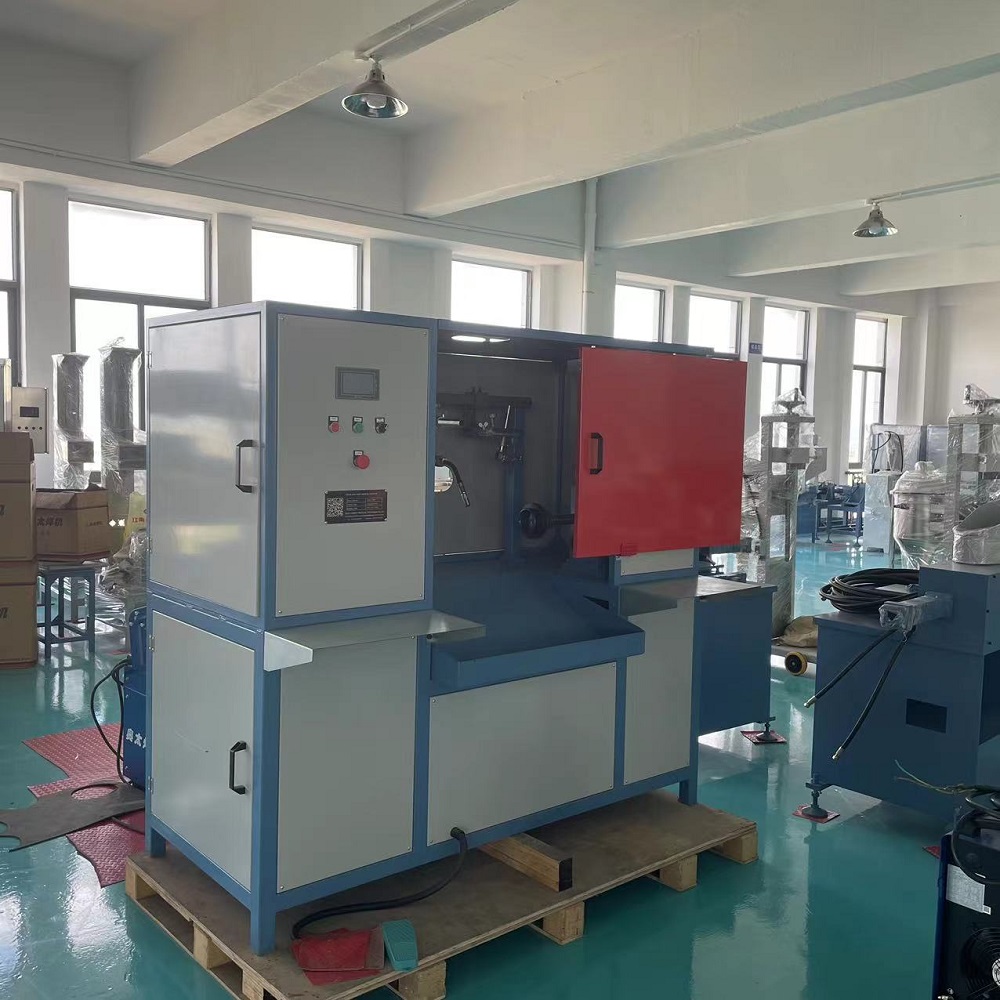
A fire extinguisher welding machine plays a key role in extinguisher cylinder manufacturing. In any production line, welding quality affects cylinder strength, surface appearance, leak testing results, and overall production efficiency. For manufacturers that want stable output and reliable product quality, choosing the right welding equipment is an important step.
Modern fire extinguisher production requires more than basic metal joining. Manufacturers need a welding solution that supports smooth operation, consistent weld seams, and long-term production stability. That is why many factories focus on welding equipment when they plan a new production line or upgrade an existing workshop.
Why Welding Matters in Fire Extinguisher Manufacturing
The extinguisher cylinder is the core part of the finished product. Before filling, painting, testing, and assembly can begin, the cylinder body must have strong and uniform welds. A poor welding result can create defects that affect later stages and increase production costs.
A stable welding process helps manufacturers reduce rework, improve inspection results, and keep production moving efficiently. It also helps create a cleaner and more professional cylinder appearance, which is important for both domestic sales and export markets.
Common Welding Applications in Fire Extinguisher Production
Different fire extinguisher cylinders require different welding operations. In many factories, welding equipment is used in key stages of cylinder body production.
Longitudinal Seam Welding
Longitudinal seam welding joins the main body section of the cylinder. This process requires stable control because the weld seam directly affects cylinder structure and later testing performance.
Circumferential Seam Welding
Circumferential seam welding is often used when connecting cylinder components such as the upper and lower sections. This process helps form a complete extinguisher body and demands good welding consistency.
Integrated Welding Solutions
Some manufacturers prefer integrated welding equipment that fits smoothly into the entire production line. This approach can improve workflow and reduce handling time between different manufacturing stages.
Benefits of a Reliable Fire Extinguisher Welding Machine
A good welding machine helps the factory in several practical ways. It improves weld quality, supports faster production, and creates a more stable manufacturing process.
Better Weld Consistency
Consistent weld seams help the cylinder meet production standards more easily. When the welding result stays uniform, the factory can improve product quality and reduce rejection rates.
Higher Production Efficiency
Automatic or semi-automatic welding equipment can help operators complete production more efficiently. Stable machine performance reduces delays and helps the line maintain better output.
Lower Rework and Material Waste
When the machine performs well, manufacturers spend less time correcting welding defects. This helps save labor, reduce waste, and improve overall production management.
Stronger Customer Confidence
Customers who visit a factory often pay close attention to welding quality. Clean weld seams and stable equipment performance show better process control and help build trust.
What Buyers Usually Look For
When customers choose fire extinguisher welding equipment, they usually compare more than the machine price. They also consider welding stability, machine durability, ease of operation, and compatibility with their production requirements.
Many buyers want equipment that matches their cylinder size, material thickness, target output, and factory layout. A suitable supplier should understand these details before recommending a machine. This helps ensure the final solution fits the project instead of creating unnecessary adjustments later.
Welding Equipment as Part of a Complete Production Line
In fire extinguisher manufacturing, welding does not stand alone. It works together with deep drawing, testing, powder coating, filling, and assembly. When welding equipment matches the rest of the production line, the factory can achieve smoother workflow and better coordination between machines.
For this reason, many manufacturers prefer suppliers that understand the complete production process. A more complete solution often makes installation easier, improves communication, and supports future expansion.
Conclusion
A fire extinguisher welding machine is an essential part of efficient cylinder production. It helps manufacturers improve weld quality, reduce production problems, and maintain stable output. With the right equipment, factories can achieve better cylinder strength, better appearance, and better overall manufacturing performance.
For companies that want to improve fire extinguisher production, reliable welding equipment is a practical investment. It supports long-term efficiency, stronger product quality, and a more competitive manufacturing operation.